CUTTING
Backwards in steel
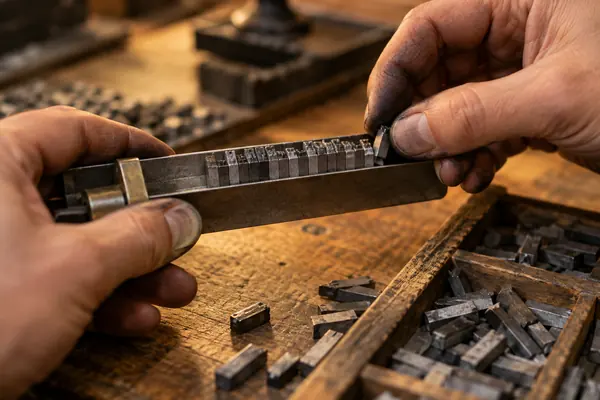
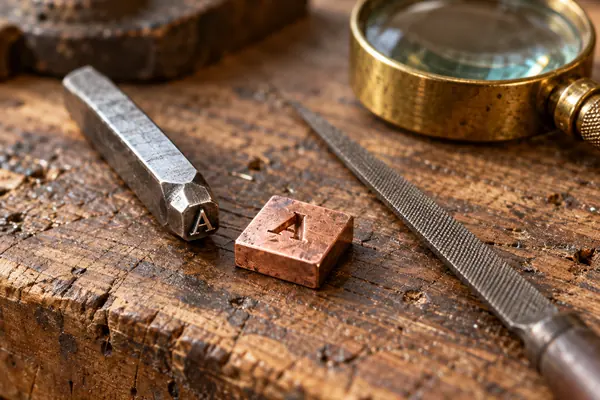
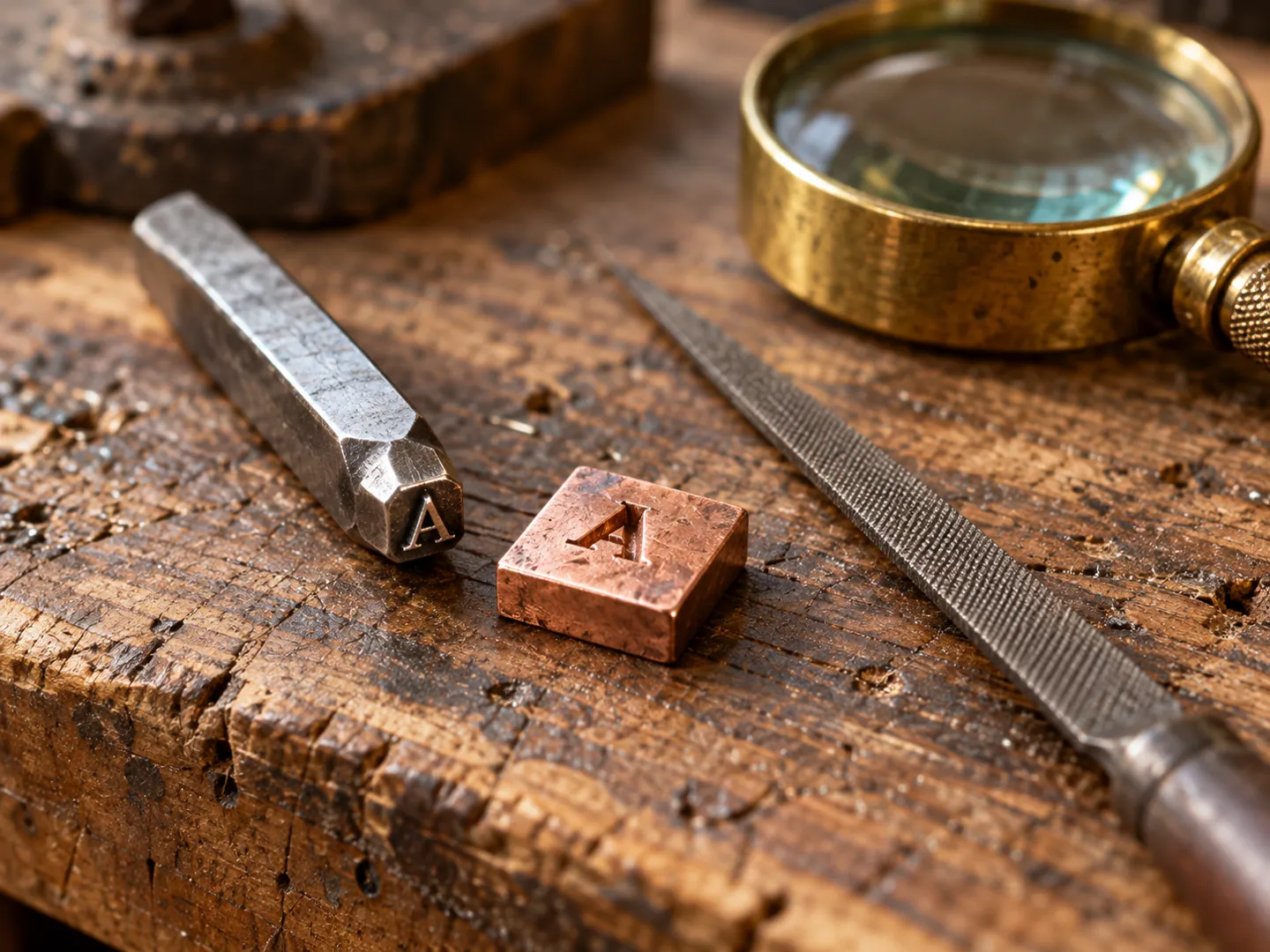
A letter cutter carved the letter in mirror image on the tip of a steel bar, called a punch. A smaller counterpunch first shaped the space inside letters like O and A.
Trace a letter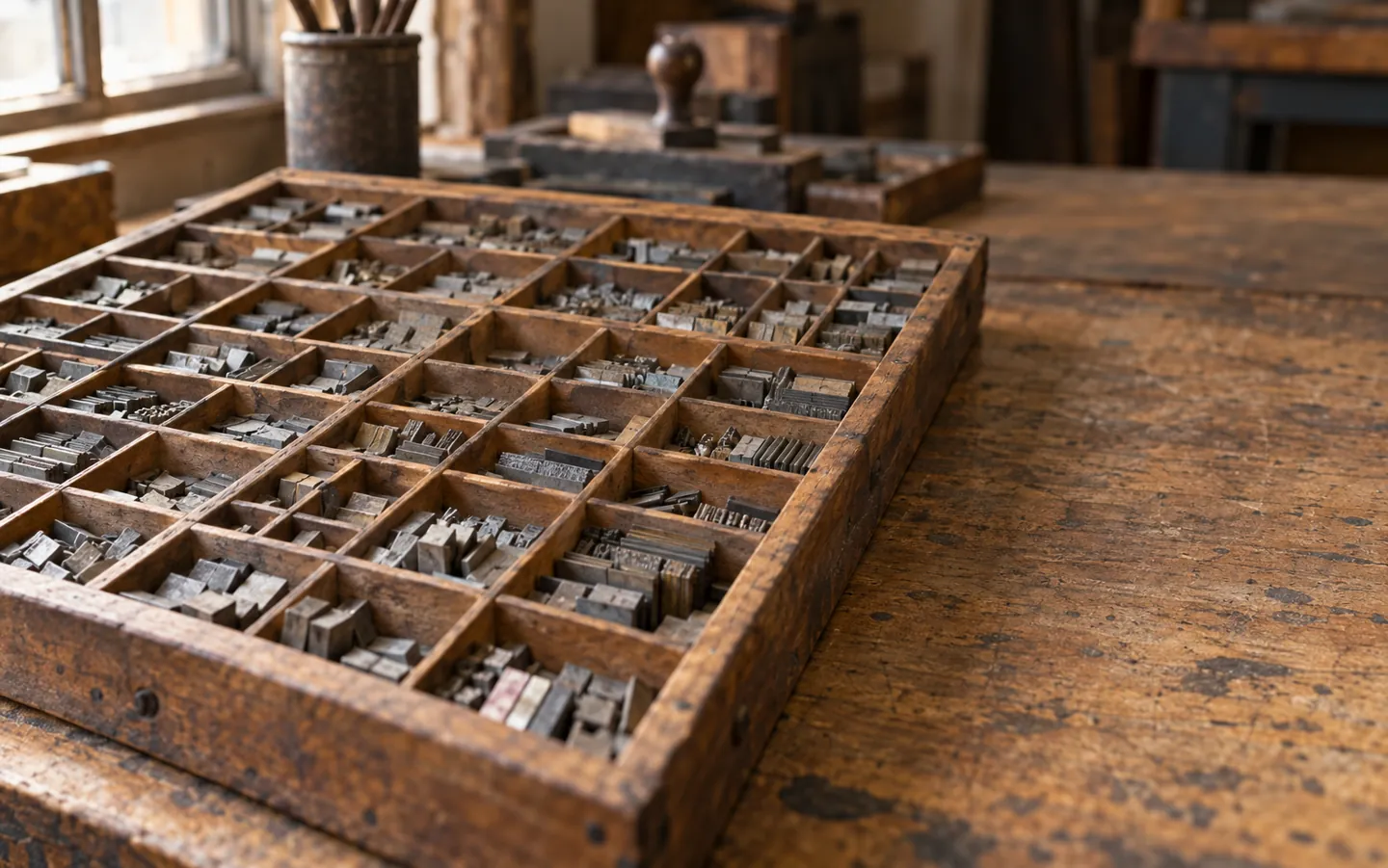
WHAT THE COLLECTIONS SHOW
1476 printing reaches Westminster
AI-generated image, not a photograph of a real person or place.
Before a font was a file, it was a drawer full of metal.
For centuries, printing meant individual metal letters, cast by hand and set one at a time. Each began as a letter cut backwards into the tip of a steel bar, and the words we still use for type come straight from that workshop.
THE SHORT ANSWER
Gutenberg's key idea was not the press but the type.
Here is how each letter was made.
CUTTING
A letter cutter carved the letter in mirror image on the tip of a steel bar, called a punch. A smaller counterpunch first shaped the space inside letters like O and A.
Trace a letterCASTING
The punch was struck into copper to make a matrix. Locked in a hand mould, it shaped poured metal, mainly lead, into dozens if not hundreds of copies of each letter.
The stepsSTORING
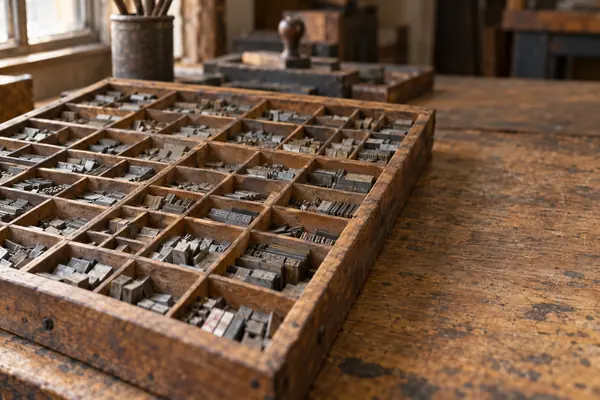
Finished type was kept in wooden cases. Capitals lived in the upper case and small letters in the lower case, which is where the names come from.
See the numbers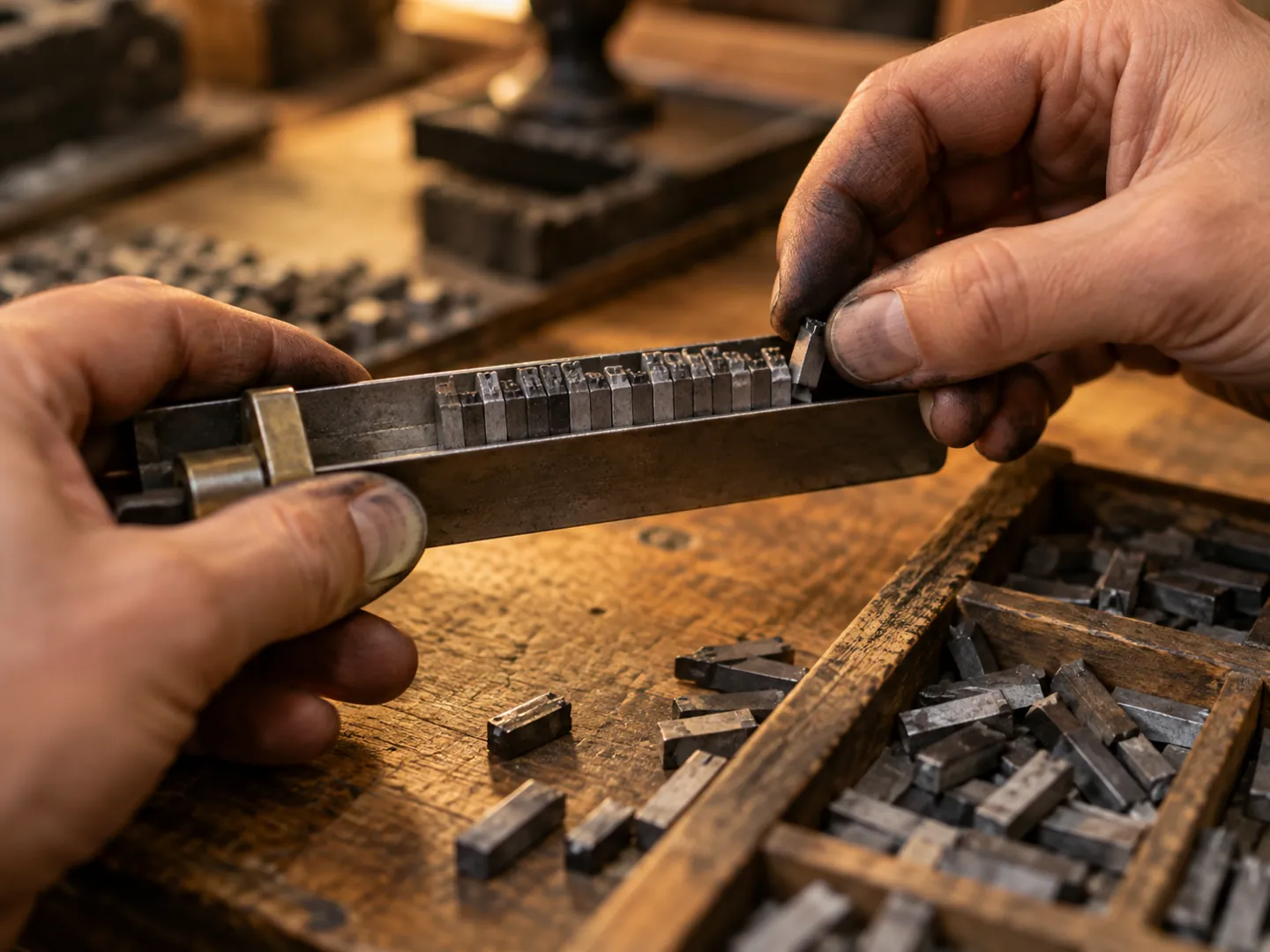
FROM DRAWING TO PRINTED PAGE
The Library of Congress sums the process up in a chain where the letter flips from backwards to forwards and back again.
A letter cutter shapes the inside of the letter with a counterpunch, then files the rest of the letter backwards on a steel punch.
A type founder hammers the punch into copper. The impression faces the right way.
The matrix is locked into a hand mould and hot metal, mainly lead, is poured in. Out comes a backwards letter on a small block.
Each piece is smoothed to a consistent size so letters line up on the page, then stored in its case ready to set.
TWO NUMBERS WORTH KNOWING
When printing reached England,
and how precise type making became.
1476
First printing press in England
William Caxton rented a shop from Westminster Abbey from 1476 to 1491. A memorial there marks where he set up the first printing press in England.
WESTMINSTER · 1476
82
Operations to make one matrix
By the 20th century, punches were cut by machine, and 82 successive operations, including microscope inspections, went into every perfect composition matrix at one Surrey type works.
20TH-CENTURY TYPE
Westminster Abbey says Caxton published a hundred books between 1473 and his death. The Science Museum Group holds punches from the Surrey works, made between 1900 and 1995.
A QUICK WORKSHOP CHECK
Pick an object from an early type foundry to see what it was for. The bar shows how highly the workshop valued it.
Based on the Library of Congress Rare Book and Special Collections Division, Just My Type (2024).
FROM HAND TO MACHINE
Centuries later the chain was the same, but tools had changed. In the 20th century, steel punches were cut by tracing patterns on a vertical pantograph machine, then ground to exact measurements for each typeface and size.
The punch was stamped into phosphor bronze to make a matrix, and a casting machine could make as much fresh type as a printer needed. Patterns, punches and matrices were so valuable that they were kept in strong rooms.
In conversation
Printers kept their metal type in wooden cases. Capitals were stored in the upper case and small letters in the lower case, and the names stuck.
Presses already existed, from wine presses to East Asian printing. The Library of Congress says his most important innovation was the process of making individual metal letters, movable type.
A piece of type prints a mirror image of itself, so the letter on the type had to be backwards for the printed letter to read correctly.
The punch was steel, the matrix usually copper, and the type itself a cast alloy of softer metal, principally lead.
William Caxton set up the first printing press in England at Westminster. Westminster Abbey records him renting a shop there from 1476.
Each figure on this page comes from the sources below.
ABOUT THIS NAME
doodlefonts.com is part of the DoodleSale portfolio. It isn't in an auction right now, but you can ask about leasing it.